
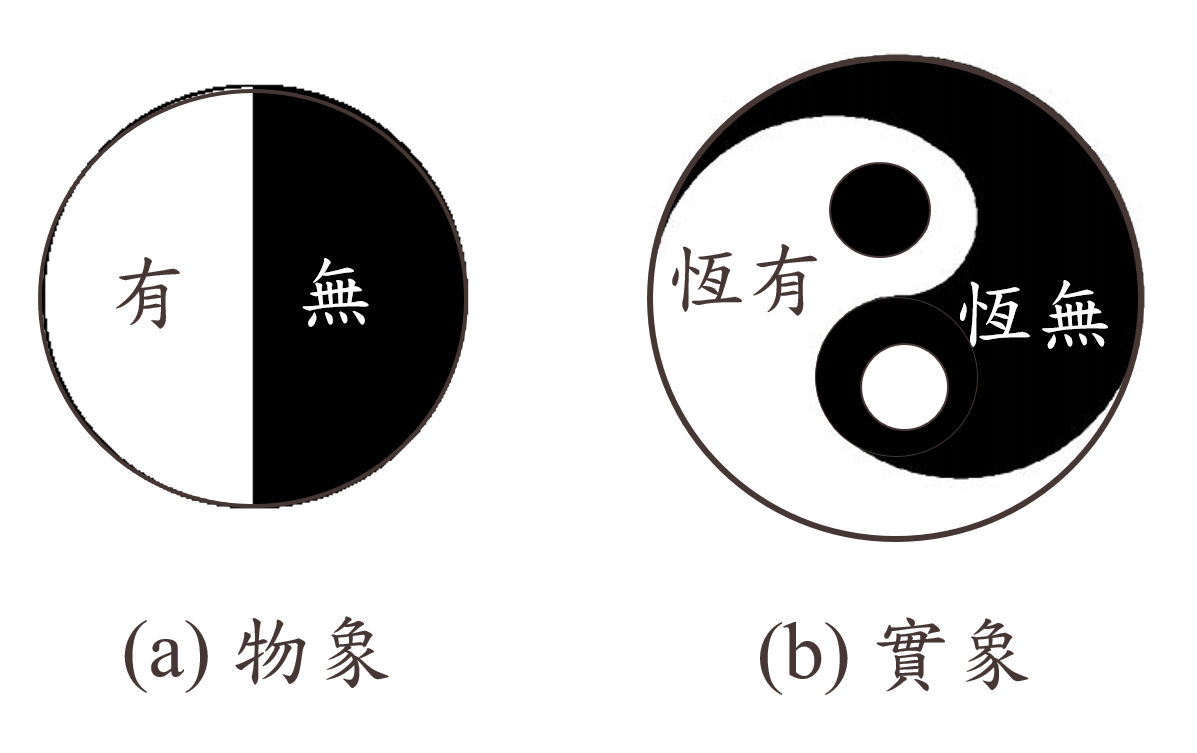
在第四節中,老子進一步說明這兩個實象是「兩者同出,異名同謂」。兩個實象是描述同一個道,而且必須是同時出現。這是老子邏輯非常重要的特點。
所以,對於一個真象,我們可以用兩個似乎是相反對立的實象來表示。其實,這兩個實象並不是對立,而是相等的表示方法。我們可以說,在道的原則下,對的「反面」不是錯的,而是另外一個對的。
這種互補的現象可以用大家熟悉的<太極圖>來表示:
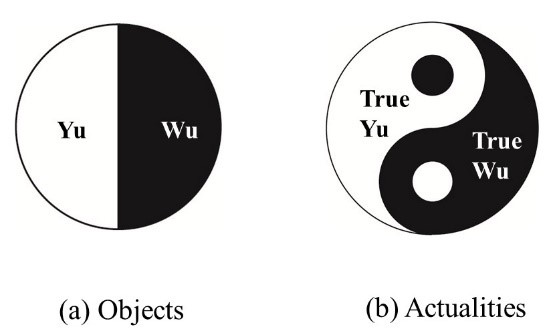
In the fourth verse, Laozi describes these two actualities as “both appearing at the same time, as two different representations of the same Tao.” This is a very important point in Laozi’s logic.
Therefore, reality will have two seemingly equivalent actualities in the phenomenal world. These two actualities are not opposite but are equivalent descriptions of the same reality. We may say the “opposite” of truth is not untrue, but another truth.
Therefore, reality will have two seemingly equivalent actualities in the phenomenal world. These two actualities are not opposite but are equivalent descriptions of the same reality. We may say the “opposite” of truth is not untrue, but another truth.
Such complementarity may be represented by our familiar picture of Tai-ji 太極圖.
 dynamictao
 Taiwan and Tao Philosophy 台灣與道家哲學